Skin Care After Plastic Surgery in Korea: Scars, Swelling and Lasers
Short answer: In the first two weeks after surgery, skin care means gentle cleansing, sun protection and whatever your surgeon prescribes. Low-level LED light is usually the first clinic treatment allowed. Scar lasers and injections typically start once the wound has fully closed, often from around four to eight weeks, and energy-based tightening or resurfacing on the operated area waits longer. Always get your surgeon's clearance first.
1. Why surgery and skin treatment are planned together in Korea
A surgical result is judged partly by the skin over it. Redness, visible scars and dull, dehydrated skin can take the shine off technically good work. Korean patients routinely pair surgery with a course of skin recovery treatments, and international patients increasingly ask how to fit the two into one trip or across two visits.
2. A realistic recovery timeline
- Days 1 to 14: Follow post-operative instructions only. Keep incisions clean and dry as directed, sleep with your head raised and avoid heat, alcohol and smoking. Some clinics offer LED light during this phase.
- Weeks 2 to 6: Stitches are out and bruising is fading. Silicone gel or sheets, strict sunscreen and gentle moisturiser are the core of scar care.
- From about weeks 4 to 8: If a scar is red, raised or wide, a doctor may start vascular laser, fractional laser or steroid injections.
- Three months onwards: Skin boosters, resurfacing and tightening treatments can usually be considered on the operated area, subject to your surgeon's advice.
Our guide to the swelling stages after eye plastic surgery shows how this plays out week by week for eyelid procedures.
3. Which skin treatments help, and where to get them
These are skin clinic treatments rather than surgical ones. YAAN Clinic, a doctor-led skin clinic in Gangnam with English consultations, is one place international patients use for this stage:
- LED light therapy in Seoul: painless red and near-infrared light used to calm skin and support healing.
- Scar revision with laser and injections: for surgical scars that stay red, raised or wide.
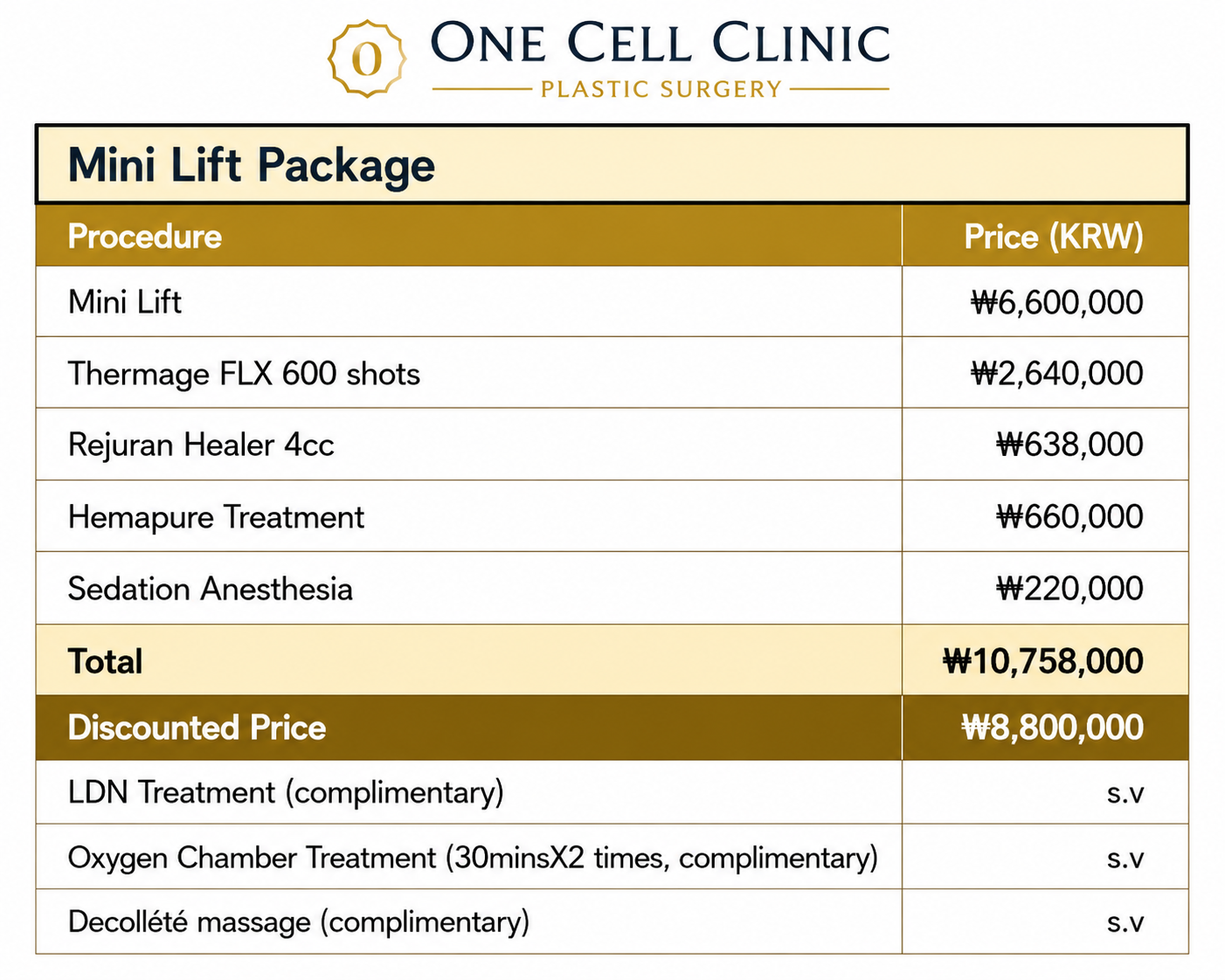
- Rejuran Healer: polynucleotide skin booster for thin or stressed skin, listed at ₩350,000 for 2 cc at the time of writing (October 2026).
If the scar itself needs to be cut out and re-closed, that is surgery; see surgical scar revision in Seoul.
4. Before you fly home
Cabin air is dry and pressure changes can worsen swelling, so allow the number of days your surgeon recommends before flying, keep skin moisturised and protect healing incisions from sun at your destination. YAAN's guide on timing skin treatments before your flight home from Korea gives suggested gaps by treatment type. Ask both clinics how remote follow-up works.
5. What to avoid
Do not have lasers, peels, microneedling or radiofrequency over a fresh incision. Avoid facials with strong massage near the surgical site, saunas and direct sun for the period your surgeon specifies. Tell the skin clinic exactly what surgery you had and when.
Frequently asked questions
How soon after plastic surgery can I have laser treatment?
Scar-focused laser often starts once the wound is fully healed, commonly four to eight weeks after surgery. Lasers on unoperated areas may be possible sooner. Your surgeon decides.
Does LED light therapy help after surgery?
LED is low risk and widely used in Korea to calm skin and support recovery. Evidence for faster healing is modest, so treat it as a helpful extra rather than a necessity.
When do surgical scars stop being red?
Most scars fade from pink to pale over 6 to 12 months. Persistent redness or thickening after two to three months is worth showing to a doctor.
Can I have skin boosters after a facelift or eyelid surgery?
Usually yes, after healing is complete, often around three months. Earlier treatment may be possible away from the surgical site.
Should I do skin treatments before or after surgery on the same trip?
Light skin treatments are better done before surgery. After surgery the priority is healing, so most skin work is saved for a later visit.
This article is general information, not medical advice. Timelines vary by procedure and patient; follow your own surgeon's instructions.