Non-Surgical Nose Job vs Rhinoplasty in Korea: Which Is Right for You?
Short answer: A non-surgical nose job (filler, threads or both) can raise a low bridge, smooth a small bump and slightly lift the tip in about 30 minutes, with results that fade over roughly 6 to 18 months. It cannot make a nose smaller, narrow wide nostrils, straighten a crooked nose or fix breathing. Those changes need surgical rhinoplasty, which is permanent but involves one to two weeks of visible recovery.
1. What a non-surgical nose job can change
Hyaluronic acid filler adds height and smooths contour along the bridge. Dissolvable PDO threads placed along the bridge and columella add support and a modest tip lift. Used together they give a straighter, slightly more projected profile, which is why the combination is popular with visitors on short trips to Seoul.
The limits matter as much as the benefits. These treatments only add volume or support. They cannot reduce a large nose, refine a bulbous tip in any lasting way, narrow the nostril base or correct a deviated septum.
2. Safety points to take seriously
The nose has a delicate blood supply, and filler placed into or against a vessel can cause skin injury and, rarely, vision problems. This is uncommon but it is the reason nose filler should only be done by an experienced doctor, with hyaluronic acid filler that can be dissolved, in a clinic that keeps hyaluronidase on hand. Avoid permanent fillers in the nose. If you have had previous nose surgery, tell the doctor, because scarred tissue raises the risk.
3. Where to have it done and what it costs
Non-surgical nose shaping is an injectable treatment, so it is usually done at a skin and aesthetic clinic rather than in an operating theatre. YAAN Clinic in Gangnam is one English-speaking option; its page on the non-surgical nose lift in Korea explains how filler, threads and nasal tip Botox are combined, and it has a separate guide to the nose thread lift. Its published price for whole-nose filler plus thread lift was ₩790,000 at the time of writing (October 2026).
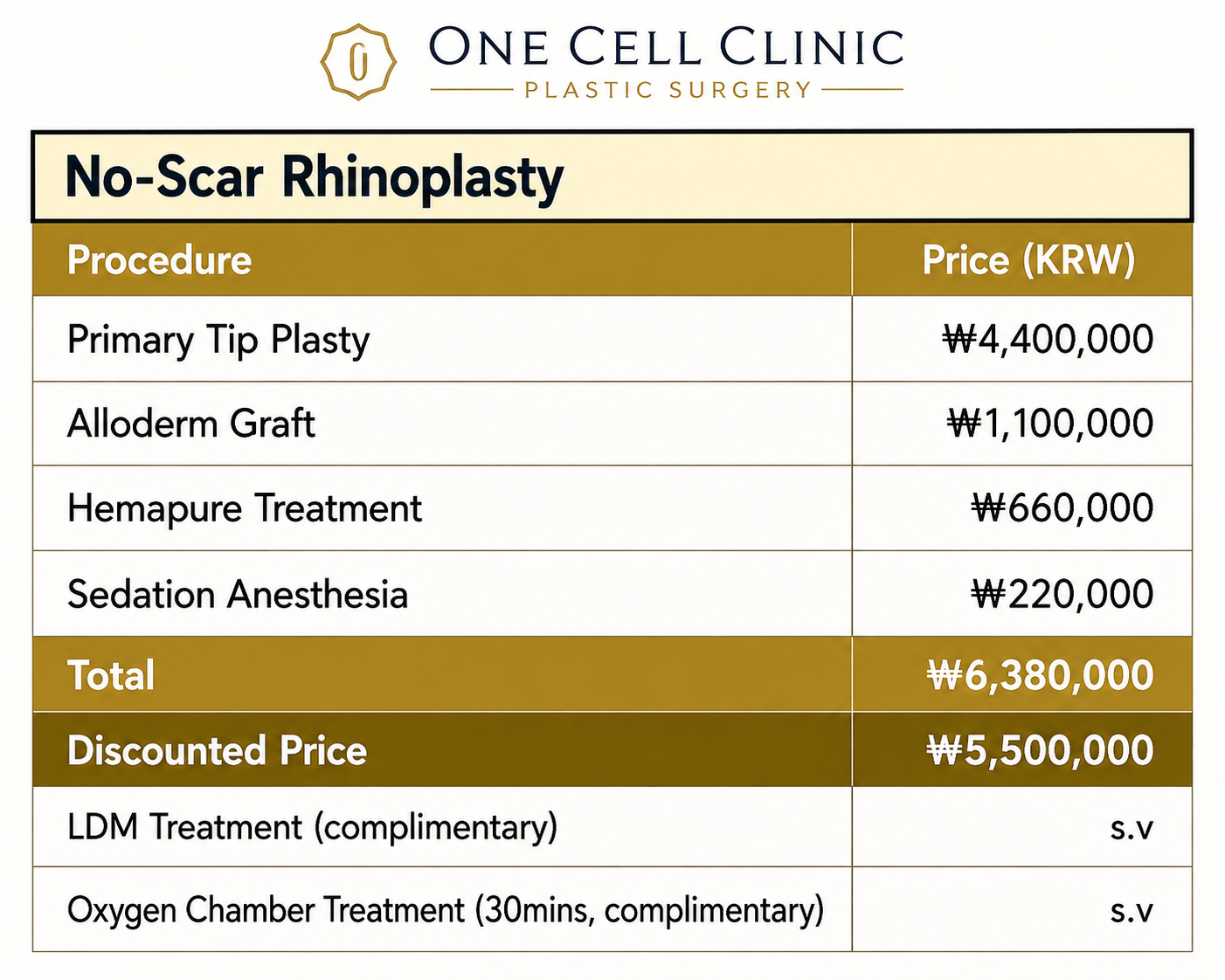
Surgical rhinoplasty in Korea costs several times more and varies widely with technique and graft material. Our guide to rhinoplasty cost in Korea breaks down the typical ranges.
4. When surgery is the right answer
Choose surgery if you want a permanent change, need the nose made smaller or narrower, have a drooping or bulbous tip, or have a breathing problem. A full rhinoplasty in Seoul can reshape bone and cartilage, while tip rhinoplasty focuses on the lower third alone for patients whose bridge is already satisfactory.
5. Can you try filler first and have surgery later?
Yes, and some patients use filler to preview a higher bridge. Tell your surgeon about any filler or threads. Hyaluronic acid filler is normally dissolved before surgery, and most surgeons prefer to wait a few weeks afterwards so the tissue can settle. Threads take longer to absorb and may affect surgical planning.
Frequently asked questions
How long does a non-surgical nose job last?
Filler in the nose typically lasts 9 to 18 months and threads around 6 to 12 months, varying with product and metabolism.
Can nose filler make my nose smaller?
No. It can make a nose look straighter and more balanced, which some people read as smaller, but it adds volume.
Is there downtime after nose filler or threads?
Mild swelling, tenderness or small bruises for a few days. Avoid pressure on the nose, including heavy glasses, for about two weeks.
Is a non-surgical nose job safe?
It is generally safe with an experienced injector and dissolvable filler, but vascular complications are a known rare risk. Seek urgent review for severe pain, skin colour change or any change in vision.
Can I fly after a non-surgical nose job?
Most people can fly within a day or two. It is sensible to stay at least 24 to 48 hours so the clinic can check you before you leave.
This article is general information, not medical advice. Suitability, risks and results vary and should be confirmed in a consultation with a qualified doctor.