Cost Comparison: Closed vs Open Rhinoplasty in Korea
Introduction
When considering rhinoplasty in Korea, one of the most common questions is “How much will it cost?” — especially when comparing closed rhinoplasty and open rhinoplasty. While both can create beautiful, natural results, their pricing structures differ based on complexity, surgical time, and the goals of the procedure.
This guide breaks down the cost comparison, what factors influence price, and how to plan your budget for nose surgery in Korea.
Typical Cost Ranges in Korea
Note: All prices are approximate and can vary by clinic, surgeon experience, surgical plan, and materials.
Closed Rhinoplasty (Primary, Standard)
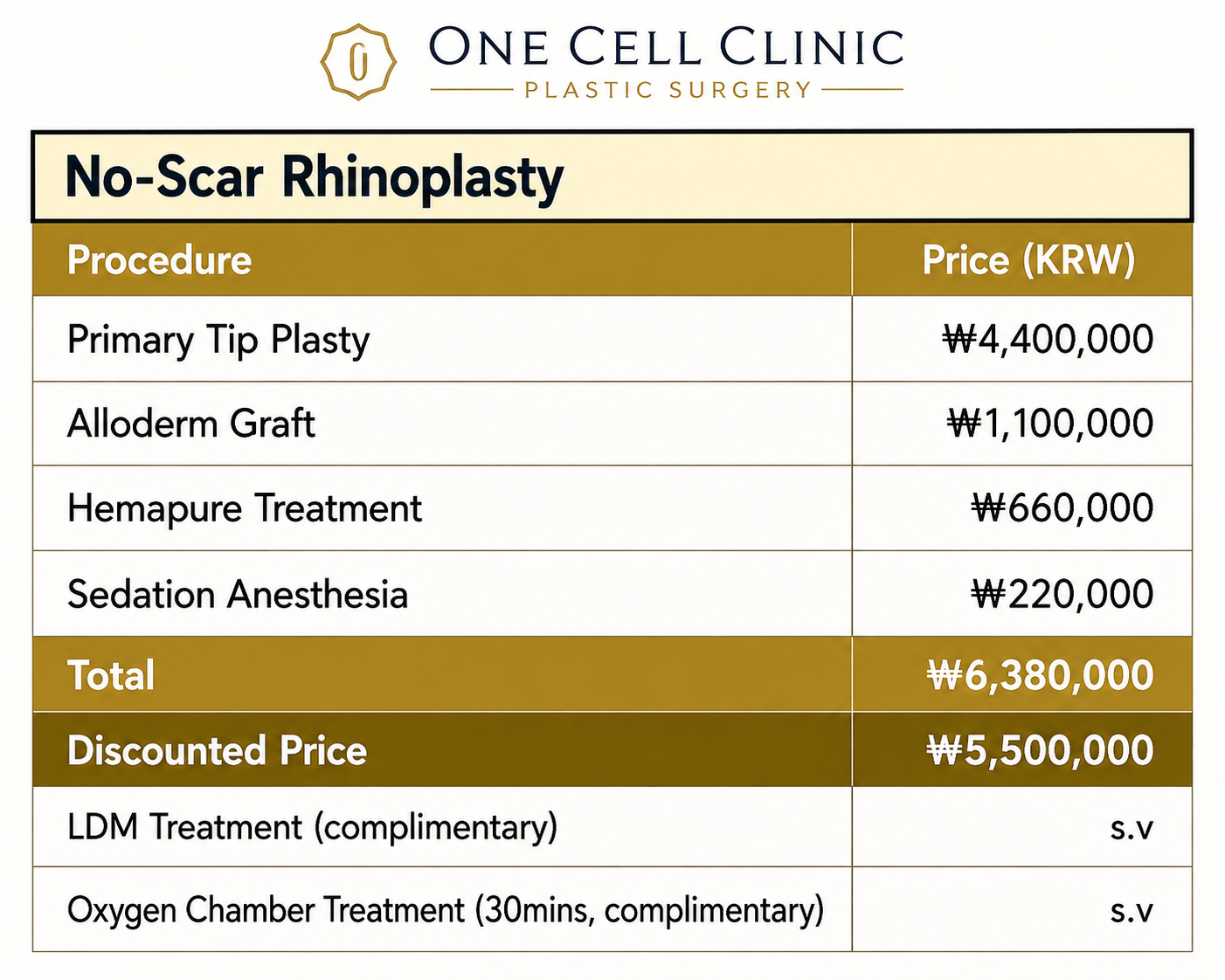
• Average Range: KRW 3,000,000 – 7,000,000
Open Rhinoplasty (Primary, Standard)
• Average Range: KRW 4,500,000 – 10,000,000
Complex Closed Rhinoplasty (Cartilage Work)
• Average Range: KRW 5,500,000 – 8,000,000+
Complex Open Rhinoplasty (Cartilage Grafts / Revision)
• Average Range: KRW 8,000,000 – 15,000,000+
Why Open Rhinoplasty Usually Costs More
1. Surgical Exposure
Open rhinoplasty requires a small external incision (columella), allowing surgeons full visibility of the nasal structure. This additional exposure generally takes longer operating time, increasing cost.
2. Complexity & Corrections
Open rhinoplasty is often chosen for:
- Crooked or asymmetrical noses
- Major tip refinement
- Thick skin
- Structural reconstruction
- Revision cases
These additional steps naturally increase price.
3. Cartilage Grafts & Structural Support
Open rhinoplasty frequently involves autologous cartilage grafts (septum, ear, or rib), which:
- Improve long-term support
- Add to surgical time and resources
- Increase overall cost
Typical Cost Breakdown
Here’s how rhinoplasty costs may look when you break down common elements:
1. Surgeon & Operating Fee
• Closed: Lower to mid range
• Open: Mid to high range
2. Anesthesia
• Injectable or general anesthesia — included in most packages
3. Surgical Materials
• Silicone implant (lower cost)
• Cartilage grafts (higher cost) — often used more in open rhinoplasty
4. Clinic & Facility Fees
• Operating room, nursing, medications — included in comprehensive packages at reputable clinics
5. Follow-Up Care
• Routine check-ups and suture removal — sometimes included, sometimes added
Cost Example Scenarios
Scenario 1 — Mild Change
• Closed Rhinoplasty x Silicone Implant
• Goal: Bridge height increase, minor tip refinement
Estimated Cost: KRW 3,000,000 – 4,500,000
Scenario 2 — Moderate Change
• Open Rhinoplasty with Tip Work
• Goal: Refined tip + bridge sculpting
Estimated Cost: KRW 6,000,000 – 9,000,000
Scenario 3 — Major Structural Work
• Open Rhinoplasty + Autologous Cartilage
• Goal: Crooked correction, strong tip support
Estimated Cost: KRW 10,000,000 – 15,000,000+
Tip: Revision surgery typically costs 30–50% more than primary procedures.
What’s Usually Included in the Price
Most reputable Korean clinics package the following:
✔ Surgeon’s fee
✔ Anesthesia
✔ Facility & operating room fees
✔ Post-operative medication
✔ Follow-up and routine checks
Always confirm what’s included before booking — some clinics itemize anesthesia, scans, or follow-ups separately.
Factors That Can Increase Cost
Nose Anatomy & Goal
• Thick skin
• Crooked nose
• Retruded tip
• Wide dorsum
These require more advanced techniques.
Implants & Materials
• Silicone (standard, lower cost)
• Gore-Tex or hybrid materials (mid range)
• Autologous cartilage (highest cost)
Surgeon Reputation & Location
• Highly experienced surgeons in Gangnam / Apgujeong / Seoul often charge more.
• Clinics known for natural aesthetics or revision expertise also price higher.
Revision Surgery
Costs increase due to:
• Scar tissue
• Structural reconstruction
• Need for cartilage grafts
Closed vs Open Rhinoplasty: Cost Summary
Closed Rhinoplasty
✔ Lower cost range
✔ Subtle changes, minimal scarring
✔ Faster initial recovery
✔ Ideal for primary, straightforward cases
Open Rhinoplasty
✔ Higher cost range
✔ Greater precision and complex corrections
✔ Slightly longer recovery
✔ Better for structural changes and revisions
Choosing Based on Your Goals
• Subtle refinement with minimal scarring: Closed rhinoplasty is usually more cost-efficient.
• Major reshaping, complex issues, or revision needs: Open rhinoplasty offers more precision, justifying the higher cost.
The best choice isn’t about price alone — it’s about long-term results, surgeon experience, and personalized surgical planning.
Final Tips for Budgeting Your Rhinoplasty in Korea
✔ Request a detailed quote including all fees
✔ Ask about revision policies — some clinics offer revision support if needed
✔ Confirm whether follow-ups are included
✔ Factor in travel and accommodation if you’re an international patient
Final Thought
Whether you choose closed or open rhinoplasty in Korea, understanding the cost differences and what influences price helps you plan smarter and avoid surprises later. The most important factor remains choosing an experienced surgeon who understands your goals.