Non-Surgical Facelift Alternatives in Korea: When Are Devices Enough?
Short answer: If your sagging is mild to moderate, such as early jowls, a softer jawline or slightly heavy cheeks, energy-based lifting (Ultherapy, Thermage) or thread lifting can give a visible but modest improvement with little or no downtime. If you have clearly loose skin, deep jowls or neck bands, a surgical facelift is the only option that removes and repositions tissue. Many patients in Korea use both at different stages of life.
1. What non-surgical lifting can and cannot do
Focused ultrasound (HIFU, including Ultherapy) and radiofrequency devices (Thermage, Oligio) heat the deeper layers of the skin to trigger collagen remodelling. The skin tightens gradually over two to three months, and the effect usually lasts around a year before a maintenance session is needed. Dissolvable threads work differently: they mechanically reposition tissue on the day and stimulate collagen as they absorb.
What these treatments cannot do is remove excess skin, reposition the deeper SMAS layer or correct vertical neck bands. They improve firmness and contour by a small, natural-looking margin. Anyone promising a "facelift without surgery" result on advanced laxity is overselling.
2. Who suits which option
- Late 20s to early 40s, mild laxity: HIFU or radiofrequency tightening, repeated about once a year.
- 40s to 50s, early jowls and flattening cheeks: a combination of ultrasound lifting, radiofrequency and sometimes threads or collagen stimulators.
- Clear jowls, loose neck skin, deep folds: a surgical consultation. Devices will give limited value here.
3. Non-surgical lifting options in Seoul and what they cost
For readers who decide surgery is not yet necessary, a skin clinic rather than a surgical clinic is the right place to start. One example is YAAN Clinic, a doctor-led skin clinic on Bongeunsa-ro in Gangnam that consults in English and publishes its prices in Korean won. At the time of writing (October 2026) its published list shows:
- Ultherapy lifting in Gangnam: Ultherapy Prime from ₩1,500,000 for 300 shots.
- Thermage FLX: ₩1,690,000 for 300 shots.
- Dissolvable thread lifting: Silhouette Soft from ₩590,000 per thread.
Their overview of sagging skin treatments in Seoul explains how the device is matched to what is actually sagging, and the full Seoul skin clinic price list is useful for budgeting before a trip. Prices change, so confirm before you book.
4. When a surgical facelift is the better choice
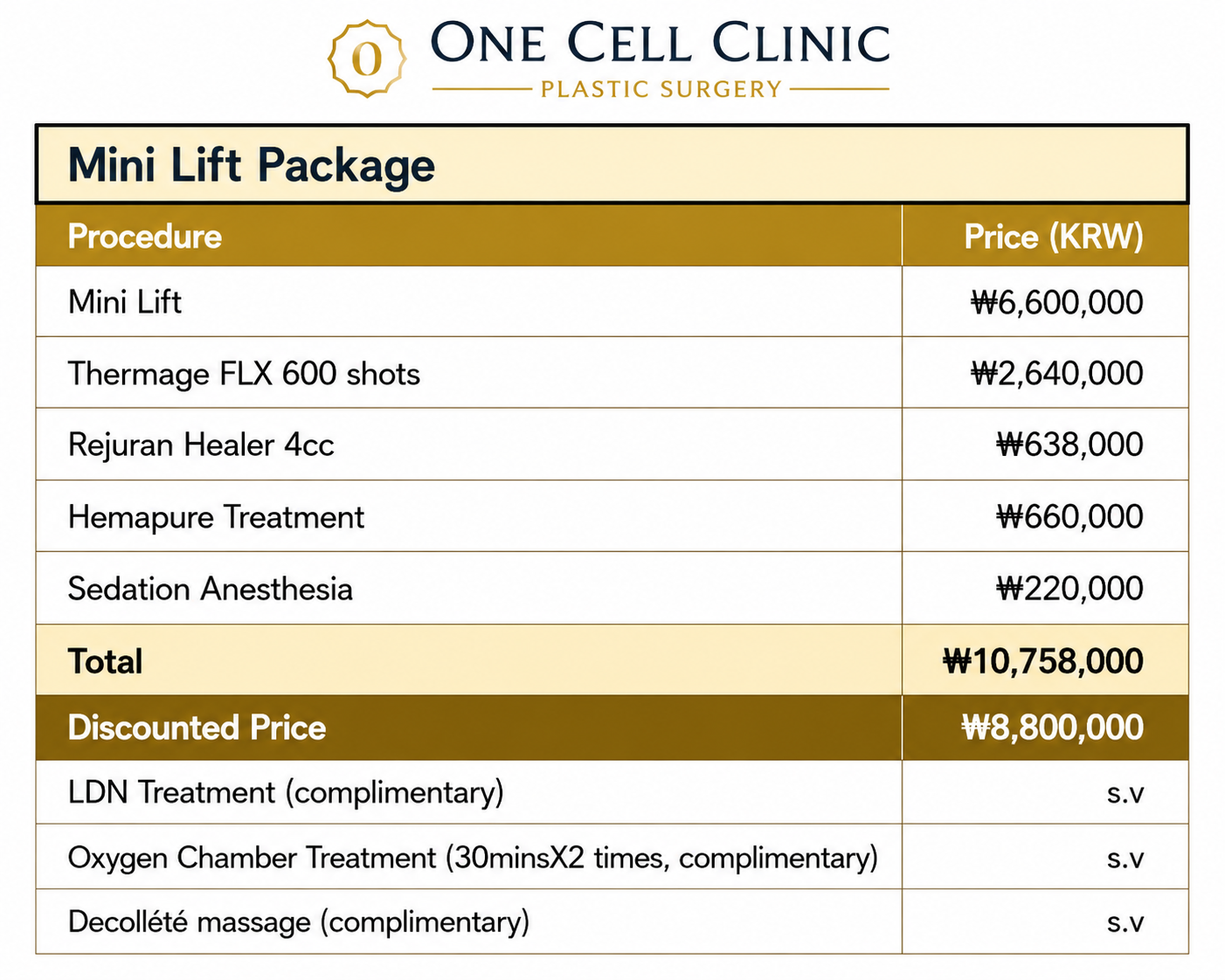
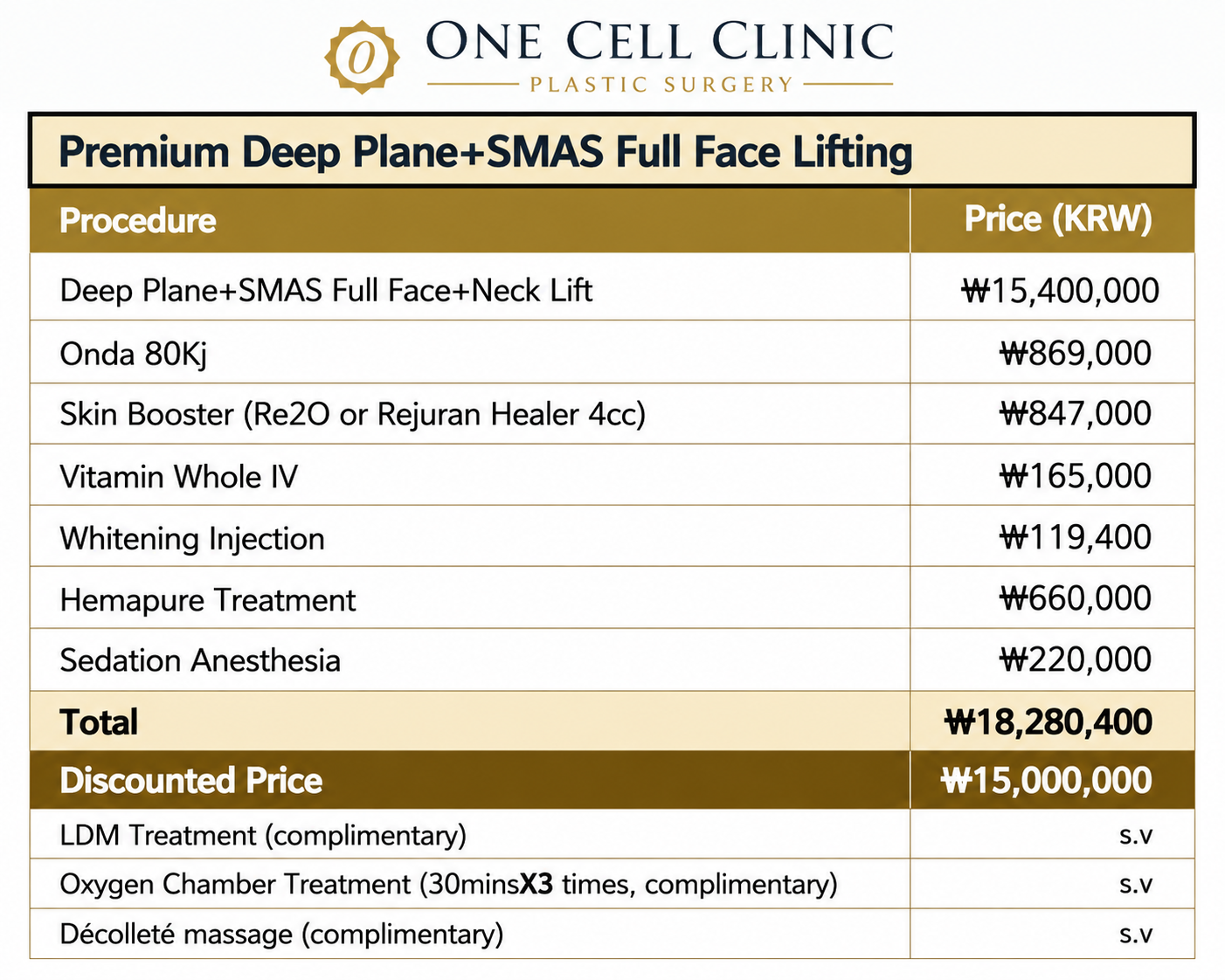
Surgery makes sense when repeated device sessions are no longer giving a visible change, or when the main complaint is excess skin rather than loss of firmness. A mini facelift addresses early lower-face laxity with a shorter scar and recovery. A full facelift in Seoul treats the lower face and neck together, and a deep plane facelift releases and repositions the deeper tissue for more advanced ageing.
Results from surgery are measured in years rather than months, but recovery is too: expect one to two weeks of visible swelling and bruising and several months for final settling.
5. Using both over time
The two approaches are not rivals. Many patients maintain skin quality with devices through their 30s and 40s, have surgery when laxity genuinely calls for it, then return to lighter skin treatments to keep the result looking fresh. After surgery, wait for your surgeon's clearance before any energy-based treatment on the operated area.
Frequently asked questions
Can Ultherapy replace a facelift?
No. Ultherapy tightens mild to moderate laxity by stimulating collagen. It cannot remove excess skin or reposition deeper tissue the way a facelift does.
How long do non-surgical lifting results last?
Typically around 12 months for ultrasound and radiofrequency lifting, and roughly 12 to 18 months for threads, depending on age, skin quality and lifestyle.
Is there downtime after HIFU or Thermage?
Most people return to normal activity the same day. Mild redness, swelling or tenderness along the jaw can last a few days.
At what age should I consider a surgical facelift?
There is no fixed age. The deciding factor is the degree of skin laxity, which a surgeon assesses in person. Most facelift patients are in their late 40s to 60s.
Can I have skin tightening after a facelift?
Yes, once your surgeon confirms healing is complete. Light maintenance treatments can help preserve skin quality afterwards.
This article is general information, not medical advice. Suitability, risks and results vary and should be confirmed in a consultation with a qualified doctor.