Canthoplasty in Korea: Eye Corner Surgery Explained
Canthoplasty in Korea: Eye Corner Surgery Explained
Canthoplasty is an eye surgery that reshapes the inner or outer corners of the eyes to change eye width, direction, or droopiness. In Korea, it’s commonly used to create wider, more balanced, and natural-looking eyes—often combined with double eyelid surgery or ptosis correction.
Note: You may also see it spelled cantoplasty. The correct medical term is canthoplasty.
What Canthoplasty Does
Canthoplasty modifies the canthus (eye corner) to:
- Widen the eyes horizontally
- Reduce a droopy outer corner
- Open a tight inner corner (epicanthal fold)
- Improve eye symmetry
It focuses on eye shape, not eyelid creases.
Types of Canthoplasty in Korea
Lateral Canthoplasty (Outer Corner Surgery)
Best for: Downturned or narrow eyes
- Extends the outer eye corner
- Creates a longer, more open eye shape
- Can reduce a tired or sad appearance
Important: Over-extension can look unnatural—experienced surgeons are essential.
Epicanthoplasty (Inner Corner Surgery)
Best for: Strong epicanthal fold covering the inner eye
- Opens the inner corner
- Makes eyes appear wider and more defined
- Commonly combined with double eyelid surgery
This is one of the most frequently performed eye procedures in Korea.
Canthopexy vs Canthoplasty
- Canthopexy: Mild tightening/support (less invasive)
- Canthoplasty: Structural reshaping (more powerful, permanent)
Korean surgeons choose based on eye support and anatomy.
Who Is a Good Candidate?
You may be a good candidate if:
- Your eyes look short or narrow horizontally
- Outer corners droop
- Inner corners feel “closed”
- You want eye shape improvement without dramatic change
Not everyone is suitable—some eye shapes risk overexposure if done incorrectly.
Korean Design Philosophy
In Korea, surgeons typically:
- Favor subtle widening, not extreme changes
- Preserve natural eye curvature
- Avoid overexposing the sclera (white of the eye)
- Design eye corners in harmony with eyelids and nose
The goal is balanced, natural eyes, not exaggerated shapes.
Recovery Timeline (Typical)
- Days 1–3: Swelling, mild bruising
- Days 5–7: Stitch removal (if used)
- 2–3 weeks: Most swelling subsides
- 1–3 months: Eye shape looks natural
- 6 months: Final result stabilizes
Most patients return to normal activities within 7–10 days.
Risks & Considerations
Potential risks include:
- Over-widening
- Visible scarring (rare with proper technique)
- Dryness or irritation during healing
- Asymmetry if anatomy isn’t respected
Choosing a surgeon experienced specifically in canthoplasty is critical.
Cost Range in Korea (General)
Costs vary by type and complexity:
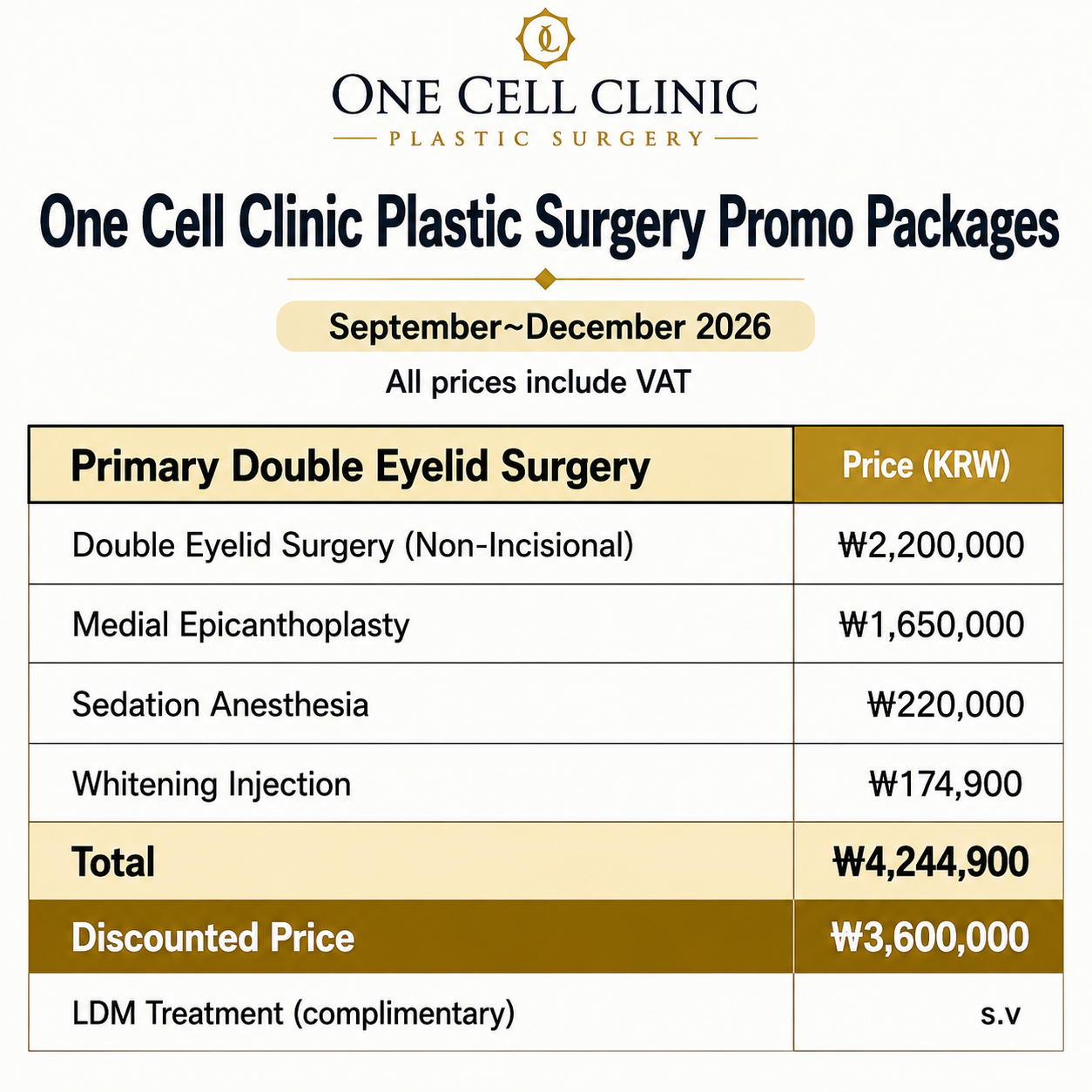
- Epicanthoplasty: mid-range
- Lateral canthoplasty: higher due to complexity
- Combined eye surgery: often discounted vs separate procedures
Exact pricing requires consultation.
Is Korea a Good Place for Canthoplasty?
Yes. Korea is known for:
- High surgical volume
- Advanced eye-shape customization
- Conservative, anatomy-based design
Many revision cases from overseas are also corrected in Korea.